Saturday, July 09, 2011

Upon Reflection

While designing a work of manipulated sounds the interest is focused on the process, and in large part it is the case that what might be generously called the composer's perspective-- fed by the familiar works that directly or indirectly influence the outcome of the sound design-- is not very apparent over the course of that process.  Later, following a number of times spent listening, some of those influences come to mind.

There are some basics informing all these Black Mountain School works, from general elements of sound and production to specific pieces.

Generally speaking, along with such works as Eno's Music for Airports and On Land, it is possible to perceive the impact of a variety of musicians and albums upon the sound and production qualities.  Among them are Pink Floyd's Ummagumma, Wendy Carlos' Sonic Seasonings, Roxy Music's For Your Pleasure, and the "atmospheric" qualities of such diverse albums as Miles Davis' Kind of Blue, Close To The Edge by Yes, Green River by Creedence Clearwater Revival, Azimuth by the group of the same name, Nat Adderley's Calling Out Loud, and a variety of tracks by The Doors, David Bowie, and The Velvet Underground.

Quite likely there are some elements of The Three Stooges in there as well.

Friday, July 08, 2011

Elevation

In academic settings, we expect young people to engage in scholarly pursuits as fully as they dive into the popular diversions of the day, yet we appear shocked when they only touch upon them superficially or avoid them altogether. Absurdly, we fail to recognize these same errors in our own approaches to problem-solving and conceptual thinking, and place the blame upon some nebulous demon we call stress.

Clearly, the mind is resilient and adaptive to stimulation of all sorts, and to simply eliminate stimulation altogether leaves an environmental void rather than a pleasing transition into a more rational or receptive state of consciousness.

The music of Black Mountain School and Ghost Radio Orchestra evolved over the course of a decade in close association with such scenarios in the academic workplace, the teaching and learning environment. As a teacher of literature and writing, I found that certain ambient compositions contributed to a classroom atmosphere of a pleasant and rewarding nature, as such music enhances, rather than dominates, attention and thought; the mind clears, yet the imagination remains alert and engaged. And unlike recordings composed in predictable patterns with repetitive elements, whether pop songs or classical works, its presence does not insist on undivided attention. One may ruminate over an idea, engage in conversation, read a book, paint a canvas or engage in some everyday task, and be elevated, to some subtle degree, yet undistracted, by the music.
"Waning Moon", from the album Elevation:

© Crucibulum Publishing (ASCAP). All Rights Reserved.

Thursday, July 07, 2011

Clarity


Consider the idea that silence may sometimes be as much of a distraction as noise. The mind, like a muddy pool after a rain, does not settle and become clear all in a moment's time. Having grown used to tuning out much that is loud and disconnected, it is not always easy to tune in to an environment conducive to introspection, reading or writing, or simply unwinding.

Wednesday, July 06, 2011

Simple, Involuntary Nervous Movements

Foot shaking and the like.  Fidgety, repetitive, rhythmic patterns.  Nervous energy, perhaps.  Restlessness.  Do these things result from external sound patterns?  Are they carried on after those patterns are removed?

Interesting questions.

Rhythm, melody, and percussion are expected in music.  It may be these things are essential to most listeners, and that music not dominated by these does not qualify as "music" at all, but is then, maybe, something like a "tone poem" or a sort of atmosphere established with sound.

That's up to the judgement of the listener, certainly.

From the album Elevation:

Tuesday, July 05, 2011

Atlantis, Avalon, Mu...

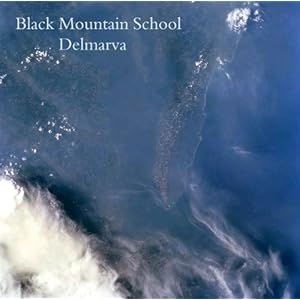
Delmarva.


Does it really exist?  Or is it a mythical land of wild ponies and mystical visions, a legend only dimly understood by the National Weather Service as an archetype of human dreams ?


Monday, July 04, 2011

Or The Greatest Good, as Lao Tsu Phrases It

The Celestial Way is Like Water


30 min. excerpt from the new album The Celestial Way.

The Celestial Way, or way of heaven, is of course the Tao, and the way of the sage. Across all cultures it can be thought of as the way of conforming the will to the phenomena of existence, which is how the Stoics put it, or of transcending the ego in general and seeing the world and the human condition more reasonably, being less attached to material things and all that.

The ancient and the state-of-the-art are interwoven cultural themes in contemporary China, as I noticed while spending ten days there recently on what might easily, if archaically, be called a whirlwind tour-- a hectic, though graciously hosted, journey through areas both urban and rural, plainly conceived to leave the visitor with the best possible impressions.  There is indeed much beauty to experience, particularly in the Yangshuo area, with its karst mountains and the Li River, and much of this album was inspired by the environment there.  While the music retains a western perspective, it is nonetheless composed of impressions and aural sketches brought to mind while passing through, and captured briefly in the field recordings of the birds, wind, and water one morning around five am.

Sunday, July 03, 2011

The Celestial Way by Black Mountain School

Release date July 15th:

The Celestial Way by Black Mountain School


Last month's release:

Delmarva by Black Mountain School


Like Delmarva, The Celestial Way is a single CD track over 70 minutes in length.  This means the MP3 download will be priced as one single track, for 99 cents.  The track Overnight into Delmarva is available now:

Overnight into Delmarva

© Crucibulum Publishing (ASCAP). All Rights Reserved.

Saturday, July 02, 2011

Forty-Eight States


I have always liked ambient music, and the concept of ambient music as Eno described it in his early releases on the Obscure label. I recall with pleasure hearing Music for Airports played in Charles de Gaulle airport in France shortly after its release. It seems now a great privilege to have heard the music in its intended context.


About this time, in the late 70s, I was introduced to recording studios, where I recorded numerous sessions with a variety of bands over the years as a vocalist, arranger of material, and coordinator of production tasks on a small number of LPs and CDs, along with numberless demos. During this time I became comfortable with the idea of a studio as a separate instrument, which led me to put together a project studio of my own.

With advances in technology my setup gradually evolved into the digital workstation format, and during this time I married, became a teacher, and was ultimately able to move out of the city and into the Carolina foothills, where I now teach world literature and cultural studies, as I have done for the past twenty years.

In due course, one might say, I have found myself returning again and again to ambient music as an enriching experience in listening, and ultimately as a creative force in my musical life.  All this makes for an interesting place to be on a fifty-fifth birthday-- and today I'm also celebrating the completion of a new album, The Celestial Way, by Black Mountain School.

It's also Franz Kafka's birthday today.

Friday, July 01, 2011

The Pride That Will Do You In

O the pain of being an intellectual!

O the pain of being an ignoramus!

Likely as not, and in both cases, it is simply gas.

Thursday, June 30, 2011

Cat Through the Window Lives Out in the Field


Along the swift passage of "middle age" and its attendant, personal ills-- decline of physical beauty, disintegration of bones and organs, likelihood of blindness through glaucoma and macular degeneration-- and having survived cancer for a number of years-- it is somewhat effortless to be less attached to the superficial and sensational and more inclined to broader and deeper experience.

Such sensibilities are not confined to the aging or elderly, certainly, and such yearnings are present in children; nor should it be supposed that such an attitude of mind is the mere result of trifling illnesses, a greater sense of mortality, or world-weariness.

No; look round about and what becomes clear is a consciousness of general cultural malaise, whether ubiquitous frenzy, absurdity, foolishness or existential nausea, belligerence fueled by powerlessness, selfishness, self-absorption, or myriad combinations of all these and much worse.   And it was ever thus-- the surrender to an understanding of reality no more valid than that of the perceivers of the shadows in Plato's analogy of the cave. Consider the patterns generated, the movements and emotional impulses suggested; note the interwoven continuum of cause and effect, and how social, "other-directed" motivations are culturally and individually reinforced.

Anyone can have a a reasoned indifference to things of that nature.  The more abstract things take on a greater reality, a greater presence, in contrast.  A degree of order and aesthetic pleasure are not bad things to experience at all.


Wednesday, June 29, 2011

Ambient Music and Change Over Time

By Brian Eno's definition, ambient music is "as ignorable as it is interesting".  But he insists, rightly, that it rewards the listener in unique ways, as atmospheric, as distinct from "background" music; as suited to engaging diverse degrees of attention; as harmonious with calm moods and thoughtful occasions and activities.

While in her university's oil painting studio, my wife listened to Discreet Music, and her professor, upon recognizing the music, told her he did the same while painting in his home studio.  In fact, he found it somewhat surprising, at the time, that one of his students was listening to ambient music while painting.  Such surprise should not be unexpected, as familiarity with ambient music, while becoming more prevalent, will not always result in a preference for such music even in the most suitable environments and circumstances.

This is changing, though, as the culture is changing.  Eno himself noted this in a brief essay on the "Death of Uncool", written in 2009.  Rigid, insular ideas regarding what we might call "style" and "substance" in social groups have lost the cachet they have had in the past.  Personal taste is no longer burdened by whether or not something has been deemed "hip" by trend-setters and commercial media, and certainly this is a positive result of the accessibility of culture and information in the digital domain.  People freely follow their own interests and are more unrestricted in their cultural pursuits.


It is quite possible that such a scenario provides listeners greater opportunities than ever before to gain an appreciation and a degree of preference for music they may have previously never encountered, and for ways of listening and engaging with music that they have not experienced before.

This cultural phenomenon creates a greater openness in potential listeners to understand and appreciate a wider diversity of music, and facilitates the process of sharing ones enjoyment of music that is beyond the typical frame of reference.

Those who have a preference for ambient music, whatever its stylistic elements, can certainly find this scenario intriguing, and even useful in bringing the music to the attention of others who might appreciate it.

The modern day artist

The present-day artist still refuses to die, but one is completely deranged to cede control of one's catalogue and works to a music industry label.  It is necessary to create these things-- label, studio, art and photography, manufacture and distribution, ad infinitum.  The DIY Ethos.

Creativity must expand beyond the narrow limits of subjective interests to the learning curve of artistic control of the processes involved. Throughout production, anything that might loosely be called artistic vision benefits by being brought to bear upon these things-- sound, imagery, the character of the final work.

Of course this is entirely different from "star-making" machinery.  Self-reliance, the value of hard work, and all that.

Three Letters

Just this minute my wife looked up from a crossword puzzle she is working on, smiled, and said, "I know this one: 'Brian ___ of Roxy Music'".

That is certainly a sign that a name has gained common currency in our culture. Interestingly, it refers to Roxy, rather than ambient, music, considering Eno's association with the band is mainly found in the first two Roxy Music albums.